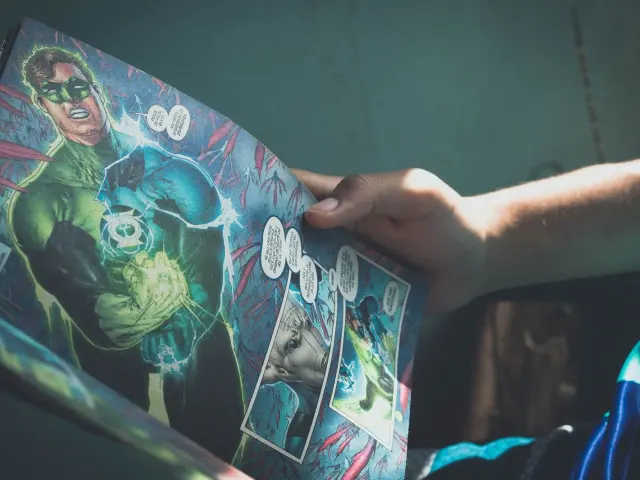

Wondering how to start reading comics without decades of backstory in your way? Pick one character or genre you already like, begin with a finished story, and don’t worry about issue #1.
This guide is one part of the wider world of london comics culture, written for readers who want a calm way in.
| Question | Answer |
|---|---|
| Must you start at issue #1? | No |
| Typical price of a single issue (Book Riot, May 2019) | $5 per issue |
| Year Maus won the Pulitzer Prize | 1992 |
| Hoopla loans on one reader’s library card (2019) | 12 items a month |
These figures come from Book Riot’s beginner’s guide and How to Love Comics. Prices and library limits change, so check the source before you rely on them.
Narrow your focus: pick a character, a team or a taste
The hard part of a new hobby with a huge back catalogue is knowing what to ignore. LitReactor’s beginner column says narrowing your focus is the key to making sense of the vast cosmos of comics, because deciding what to follow tells you what you can skip. You can read that advice in LitReactor’s Start Reading Comics column.
Three simple filters work well:
- A character. Follow one hero and ignore every title without them. Unless you pick someone like Wolverine or Batman, LitReactor notes you can get away with buying just one or two titles a month.
- A team. Team books introduce a wider range of characters, so they show you the breadth of a fictional universe. Keep a Wikipedia page open while you read.
- A taste. Ask what films, books, TV shows or video games you enjoy, and look for comics with the same feel.
Comics are far more than capes. How to Love Comics lists science fiction, humour, fantasy, memoir, horror, crime, espionage, romance, adventure and war among the genres on offer, so if a genre exists, it has probably been done in comics.
Do you have to start at issue #1?
No. The writer at How to Love Comics began reading X-Men at issue #188, did not follow everything at first, and still caught up quickly. The same page says that if you start with an issue that begins a story arc, it doesn’t matter that it isn’t issue #1.
Publishers know new readers arrive mid-run. The site credits the late Stan Lee with the line “every comic is someone’s first”, and says editors often add recap pages at the front.
If a name or event confuses you, look it up. Wikipedia, Comic Vine and fan wikis are named as quick ways to fill gaps, and you do not need to know a character’s full history to enjoy their current story.
Start reading comics with trades, singles or graphic novels
The format you buy shapes how easy your first read feels. Book Riot explains that trade paperbacks (trades) collect single issues into a complete story. In its May 24, 2019 guide it puts the cost of a single issue at $5 per issue, so prices today may differ.
- Single issues are the monthly or weekly instalments. They often end on a cliffhanger.
- Trades bundle a run of issues into one book with a beginning, middle and end.
- Graphic novels are books made as one story, and some publishers’ titles were never released as single issues.
For superheroes, a Kirkus beginner’s guide of May 17, 2024 suggests skipping the weekly issues in favour of full collections. It recommends picking an arc and reading it from start to finish, such as Frank Miller’s Batman: Year One, so you can see how a writer paces the action. You can read that advice in Kirkus Reviews.
Where can you read comics without spending much?
Start with free and low-risk sources. How to Love Comics suggests borrowing from friends who read comics and using your local library’s graphic novel shelves, where you can return a book you don’t enjoy and try another.
Many libraries also offer digital services such as Comics Plus and Hoopla. Book Riot’s author had access to 12 items a month on one library card, and warns that heavy readers may outgrow a monthly cap, so ask your own library what its limit is.
When you want to buy in person, staff can point you to a good first read. Our list of the best comic shops in london is a handy place to start looking. How to Love Comics also says most comic retailers are friendly, helpful and passionate, and that the grumpy shopkeeper stereotype is now rare.
How do you read a page of panels?
If you usually read prose, a comic page can feel busy at first. A George Mason University guide to reading graphic novels says to start at the top left, and that panels may be different shapes but they read left to right and top to bottom. You can find it in LEAP’s Guide to Reading Graphic Novels.
The same guide suggests looking at the pictures and reading the words twice before you turn the page. Slowing down is not cheating; the story lives in both.

Small print is the commonest complaint. Book Riot’s tip is to read on a tablet, where you can zoom in on each panel and the print stops being a problem.
Easy first reads, sorted by what you like
There is no single correct first comic. These picks, all named in the sources above, match different tastes:
- If you read mostly prose: try a graphic memoir. Book Riot calls Maus a common starting point, and Marjane Satrapi’s Persepolis is her graphic memoir of growing up in Iran. Maus won the Pulitzer Prize in 1992.
- If you want superheroes: Book Riot names Alan Moore’s Watchmen and Frank Miller’s Batman: Year One and Batman: The Dark Knight Returns as popular DC classics.
- If you want something gentler or odder: Book Riot’s author chose Hilda because it felt less intimidating, and calls Saga by Brian K. Vaughan and Fiona Staples her favourite series.
- If you want to understand the form: Kirkus says Scott McCloud’s Understanding Comics is the first of his books to pick up, and the whole book is drawn as a comic.
Publishers beyond the big two are worth a look too. Book Riot names Image, Dark Horse, Fantagraphics, and Drawn & Quarterly among them, ranging from superhero-friendly to not a superhero in sight.
If you would like a homegrown angle, browse the british comic book characters and see which ones tempt you.
Frequently asked questions
Do I need to know Marvel or DC history first?
Show answer
No. How to Love Comics says writers keep readers informed through the story itself, editors often add recap pages, and you don’t need a character’s full history to follow their current story.
Are comic shops unfriendly to newcomers?
Show answer
The stereotype is out of date, according to How to Love Comics. It says most retailers are friendly and happy to answer questions, and that comic retail has become more accommodating over the past 15 years.
Should I buy single issues or trades?
Show answer
Trades suit most beginners. Book Riot says singles can run $5 an issue, and trades give you a complete story in one book. Check current prices, as that figure is from 2019.
Is a graphic novel a good first step?
Show answer
Yes, especially a graphic memoir. Book Riot says memoirs are a great place to start if you’re used to reading prose and haven’t yet got used to captions and speech bubbles.